The Chamaecrista rotundifolia var. rotundifolia is a plant of the order Fabales. Limited information is available on this genus, let alone species.
Clements et al. (1996) used Roundlead cassia (C. rotundifolia) in a large study on Queensland cattle, ensuring that this species was not toxic. They also report that the selection of non-cassia foods tended to be foraged until mid autumn. The problem here is that cassia will no doubt have a high persistence on farms and grasslands since it is being selected against (the cattle just don't like that chow).
Friday, January 20, 2012

Monday, January 16, 2012
Usnea subeciliata
The Usnea subeciliata is a fruticose fungi of the order Lecanorales. This order is commonly referred to as Old Man's Beard and people will be familiar with this form factor if they go for walks in rainforests.
No further information can be provided about this species.
No further information can be provided about this species.
Sunday, January 15, 2012
Poecilia latipinna


The Poecilia latipinna is a bony fish of the order Cyprinodontiformes, commonly know as Sailfin molly. They are an introduced species of Australia, the native habitat being fresh, brackish and coastal waters of America.
Many aquarists will recognise this species from black molly, a common tank fish. P. latipinna has very similar traits. It has a short life span and tends to fend on algae. Males can grow to a maximum of 3 inches while females only to 2.5 inches.
Saturday, January 14, 2012
Columba livia

The Columba livia is a bird of the order Columbiformes, commonly known as the Rock Pidgeon or simply the Pidgeon. Many people will recognize this species as those that congregate in city parks and outdoor shoppings malls. Heck, I even knew someone who had a phobia of this species!
They have two blackish stripes across their wings, with a dark grey body. They have a length of about 32-37 cm with a wingspan of 64-72cm. They are a monogamous species.
Friday, January 13, 2012
Phaius australis

The Phaius australis is an orchid of the order Asparagales, commonly known as
Lesser Swamp Orchid or Southern Swamp Orchid. It inhabits swampy forests at sea level and its' distribution in Australia is from SE Queensland to Lake Cathie, NSW.
The leaves can grow 30-70cm long and 3-10cm wide, mostly reverse lanceolate, with 4 to 8 leaves per shoot. Cultivation of this species is difficult and may be one reason that this species is not common.
Currently, Phaius australis is classed as endangered by Queensland (NCA 1992) and Australian (EPBC 1999) Acts.
Thursday, January 12, 2012
Croton stigmatosus
The Croton stigmatosus is a houseplant of the order Malphigiales. The genus name refers to the shape of the seeds of some species that is sometimes shaped like a tick.
The margins of leaves mostly toothed, secondary veins impressed above, distinctly raised below. There is limited information about Croton stigmatosus.
The margins of leaves mostly toothed, secondary veins impressed above, distinctly raised below. There is limited information about Croton stigmatosus.
Wednesday, January 11, 2012
Wallabia bicolor

The Wallabia bicolor is a mammal of the order Diprotodontia, commonly known as Black Wallaby, Black-tailed Wallaby, Fern Wallaby, Black Pademelon, Stinker (in Queensland), and Black Stinker (in New South Wales). It is the only living member of the genus Wallabia.
The distribution of W. bicolor ranges from Cape York, down along the coast to Victoria, and including some inland habitats. These can be thick undergrowths and woodlands.
The average length is about 76 cm for males, and 70 cm for females (excluding the tail).
Tuesday, January 10, 2012
Chiloglottis sp.
The Chiloglottis sp. is a small genus of orchids of the order Asparagales. Very few, if none have been properly described. The genus comprises deciduous terrestrial orchid which and native to Australia.
An individual commonly has 1-4 paired lanceolate leaves, flowers have 4 pollina, and the peduncle elongates after pollination. Like many orchids, the flowers act to attract pollinators.
An individual commonly has 1-4 paired lanceolate leaves, flowers have 4 pollina, and the peduncle elongates after pollination. Like many orchids, the flowers act to attract pollinators.
 |
| C. valida |
 |
| C. trapeziformis |
 |
| C. diphylla |
Monday, January 9, 2012
Plantago coronopus subsp. coronopus

The Plantago coronopus subsp. coronopus is a plant of the order Lamiales. It is often grown as a vegetable throughout Eurasia and North Africa, however, it is an introduce species in Australia.
The leaves are long with lance-shaped lobes, up to 25 cm. The inflorescence can grow up to 0.5m tall.
Sunday, January 8, 2012
Boletellus spp.
The Boletellus spp. are a club fungi (a reference to the process of reproduction) of the order Boletales, the genus name, Boletullus, meaning "small Boletus". The genus contains about 50 species of which are generally found in subtropical regions.
The genus contains morphologies such as caps that are covered with tufts of hair or warts. However, many of these characteristics have become amended since first description over 100 years ago.
Since the OotD is a genus of organisms, here are a few specimens below.
The genus contains morphologies such as caps that are covered with tufts of hair or warts. However, many of these characteristics have become amended since first description over 100 years ago.
Since the OotD is a genus of organisms, here are a few specimens below.
 |
| B. ananas |
 |
| B. emodensis |
 |
| B. russellii |
Thursday, January 5, 2012
Acacia decurrens
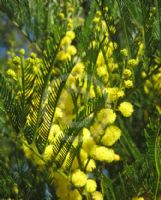
The Acacia decurrens is a plant of the order Fabales, commonly known as Acacia bark, Early black wattle, Green wattle, Sydney wattle, Wattle bark, Tan wattle, Golden teak, Brazilian teak.
The flowers are fragrant and yellow and grows to 15m tall. Considered a weed in some parts of Australia like the Western regions.
Wednesday, January 4, 2012
Acacia concurrens

The Acacia concurrens is a plant of the order Fabales, commonly known as Curracabah or Black Wattle. A tall shrub or small tree to 10 metres, flattened leaf stalks called phyllodes, where the upper margin is curved and the bottom margin tends to be straight.
A. concurrens can fix nitrogen and this trait allows this species to grow quickly in poor soils. Many insect species use plant material from this species and so it is an important plant to have in vegetation recovery programs.
Tuesday, January 3, 2012
Trapezites maheta

The Trapezites maheta is a moth of the order Lepidoptera, commonly known as the Maheta Skipper or Northern Silver Ochre. It is a small moth with a wingspan of only 30mm.
Currently, it has been spotted in QLD and NSW, but exact locations have not been disclosed.
Monday, January 2, 2012
Eulamprus quoyii

Sunday, January 1, 2012
Acacia penninervis
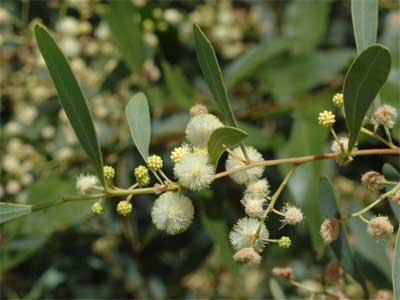
The Acacia penninervis is a plant of the order Fabales, commonly known as the Mountain Hickory. It is native to Australia and New Zealand on somewhat sandy or stony soils, in regions of high rainfall - dry eucalypt forests.
The growth habit is erect and tall shrub and 2-8 metres tall. Leaves are phyllodes, alternate and dark green colour, 5-15 cm long and elliptical. Flowers of 10-30 heads in racemes from July-September.
Subscribe to:
Posts (Atom)